


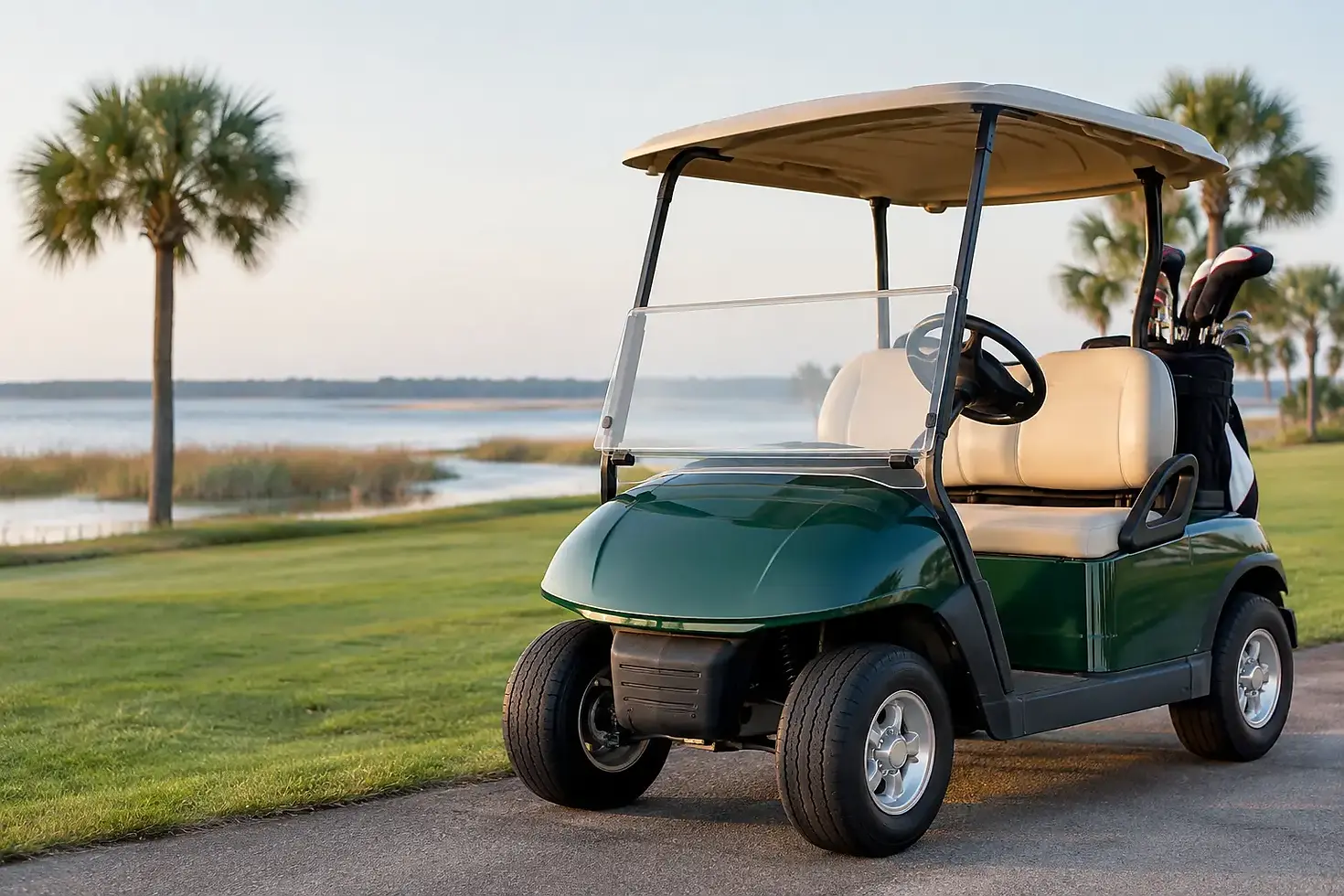
Do Golf Carts Need Titles? South Carolina Rules

A cart can look ready for the road with upgraded wheels, lights, a rear seat, and a fresh custom color. That does not automatically mean it has the paperwork of a car. So, do golf carts need titles in South Carolina? For a standard golf cart used around a neighborhood, campground, resort property, or golf course, usually no. But the answer can change quickly if the vehicle is classified and equipped as a low-speed vehicle for public-road use.
That distinction matters when you are buying, selling, insuring, or planning your rides around Myrtle Beach. Here is what to know before you hand over payment or head out for your first ride.
Do Golf Carts Need Titles in South Carolina?
A conventional golf cart generally does not receive a South Carolina vehicle title. It is typically sold with ownership paperwork rather than a state-issued certificate of title. For a new cart, that may include a dealer invoice, purchase agreement, and manufacturer paperwork. For a pre-owned cart, the key document is usually a detailed bill of sale from the seller.
No title does not mean no proof of ownership. A golf cart is still a valuable vehicle, and its identifying number should be documented. The serial number or vehicle identification number, depending on the model, helps establish exactly which cart changed hands. This is especially useful with customized carts, where an older base vehicle may have newer batteries, seats, wheels, body panels, and accessories.
A clean paper trail protects both sides of the sale. It helps a buyer show where the cart came from, helps an insurer identify it correctly, and makes a later resale far simpler. If a seller cannot provide a reasonable ownership history or the identification number appears altered, stop and get answers before buying.
The Big Difference: Golf Cart vs. Low-Speed Vehicle
The word "golf cart" gets used for almost every small electric vehicle, but state and federal rules make a meaningful distinction.
A standard golf cart is built primarily for use on golf courses, private property, and locations where local rules allow golf cart travel. It may be a great choice for neighborhood trips, beach-community transportation, resort grounds, and family rides. It does not become a titled road vehicle simply because it has headlights, turn signals, mirrors, or a windshield.
A low-speed vehicle, often called an LSV, is a different category. These vehicles are manufactured or certified to meet specific federal safety requirements and can be titled, registered, and insured for approved public-road use. They typically carry a 17-character VIN and include equipment such as seat belts, a windshield, exterior mirrors, lighting, reflectors, a parking brake, and a compliant vehicle identification label.
If an LSV is being operated as a motor vehicle on public roads, title and registration requirements generally apply. The exact process depends on how the vehicle was manufactured, certified, and documented. A cart that has been modified after purchase may still not qualify as an LSV. Adding street-style equipment is smart for visibility and convenience, but it is not the same as manufacturer certification.
That is the question to ask before shopping: Do you need a neighborhood cart with permitted local access, or do you need an LSV designed for the road rules that apply where you live? The best answer depends on your planned routes, your community, and the vehicle itself.
Street Use Requires More Than Ownership Papers
South Carolina allows golf cart operation in certain situations, but permission is not unlimited. State rules and local ordinances can affect where, when, and how a golf cart may be driven. A golf cart permit from the South Carolina Department of Motor Vehicles may be required for eligible public-road operation, along with liability insurance and a valid driver's license.
Rules commonly focus on secondary roads, distance from the address associated with the permit, daylight operation, and whether a municipality or county has added local restrictions. Roads with higher traffic speeds, state highways, intersections, bridges, and certain resort-area routes may have different limitations. Private communities, HOAs, campgrounds, and resorts can also create their own rules, even when the state would otherwise permit cart use.
This is why a quick "it is street legal" claim is not enough. Ask where the cart will be driven most often. A cart that works perfectly for a gated neighborhood may not be allowed for a trip across a busy corridor to a restaurant, store, or beach access point.
Before using a cart on public roads, confirm the current requirements with the SCDMV and the local authority that governs your specific area. Regulations can change, and a dealership can help you understand vehicle features and paperwork, but only the appropriate state and local agencies can confirm a route is legal for your use.
What Paperwork Should You Keep With Your Cart?
Whether your cart needs a title or not, keep its records together in a safe place. This is one of the easiest ways to protect your investment and avoid a frustrating resale conversation down the road.
For most golf cart owners, the file should include:
The original invoice or bill of sale showing the buyer, seller, sale date, price, and cart identification number.
Manufacturer documentation, including any certificate or statement of origin provided with a new vehicle.
Battery, charger, accessory, and service records, especially for lithium-powered carts and major upgrades.
Insurance information and any permit or registration paperwork required for your intended road use.
When selling a used cart, make the bill of sale specific. Include the year, make, model, color, serial number or VIN, mileage or hour information if available, and a clear note of the cart's condition. List included items such as the charger, keys, enclosure, upgraded seats, or rear-facing seat kit. That level of detail is good business and prevents confusion after the sale.
Buying a Pre-Owned Cart Without a Title
A missing title is not automatically a red flag because most ordinary golf carts are not titled in the first place. What matters is whether the seller can demonstrate legitimate ownership and provide the records needed for the type of vehicle being sold.
Start by matching the number on the cart to the invoice, bill of sale, or manufacturer paperwork. Look for signs that the number has been scratched off, replaced, or covered. Confirm that the cart is not being presented as an LSV without the VIN, certification label, and documents needed to support that claim.
Also look beyond the paperwork. Check battery age and condition, charger operation, tire wear, suspension, brakes, steering, lights, seat condition, and overall fit and finish. A lower purchase price can lose its appeal fast if the cart needs a battery pack, charger, tires, or electrical repairs right away. Buying from an established dealer gives you a clearer opportunity to review the vehicle, its condition, and the documents that come with it before making a decision.
Choose the Cart That Fits Your Actual Ride
For many Grand Strand owners, a conventional electric golf cart is the right call. It is ideal for neighborhood rides, property use, resort communities, golf outings, and getting the family around in true style where permitted. A four-passenger cart may be perfect for a couple and visiting family, while an all-forward-facing six-passenger model makes group transportation much easier.
If your daily route depends on public streets, begin with the route rather than the paint color or seating layout. Find out which roads you must use, how far you will travel, and whether your destination has parking and access rules for carts or LSVs. Then match the vehicle category, equipment, passenger capacity, battery range, and paperwork to that plan.
At GOLF CART PROS, that conversation starts with how you want to ride, not with a one-size-fits-all answer. Bring your questions, your neighborhood details, and your wish list for your new ride around town. The right cart should feel exciting when you drive it home and straightforward when it is time to insure, permit, or sell it later.


Comments